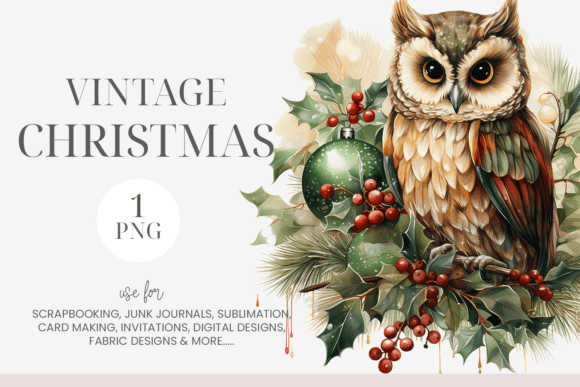
Vintage Christmas Owl Clipart
When I first opened the folder labeled Vintage Christmas Owl Clipart, I wasn't just looking at a digital image; I was immediately thinking about the needle and thread. As someone who spends hours evaluating machine embroidery design files for both personal projects and client work, my first instinct is to assess how a graphic will translate from a screen to fabric. This particular piece of Illustrations catches the eye with its nostalgic charm, but does it hold up under the pressure of real-world stitching? In this review, I am putting Vintage Christmas Owl Clipart through the wringer to see if it deserves a spot in your next embroidery project.
The First Stitch: Visual Personality and Mood
The moment you view the file, the mood is unmistakably cozy. The vintage aesthetic suggests a time when holidays were slower and sweeter, which translates perfectly into the tactile world of handmade goods. Unlike modern, hyper-realistic designs that often require complex shading and high stitch counts, this design relies on clean lines and distinct shapes. For an embroidery designer, this is music to the ears. It promises clarity without getting bogged down in unnecessary complexity.
The layout feels balanced, making it versatile enough for various applications. Whether you are creating a tote bag design or a small detail on a baby's onesie, the visual weight of the owl sits comfortably within the frame. It doesn't scream for attention so much as it invites the viewer to lean in closer. This subtlety is crucial for commercial embroidery where the goal is often to create a product that feels premium rather than mass-produced. The "vintage" vibe adds a layer of perceived value, suggesting that the finished item is curated and thoughtful.
Real-World Application: From Screen to Sweatshirt
Let me take you through a specific scenario I recently encountered. A client came to me needing a custom holiday gift for a boutique owner. They wanted something unique that wouldn't look like every other generic snowman sweater found in big-box stores. We decided to test Vintage Christmas Owl Clipart on a heavy cotton sweatshirt. My thought process was immediate: could this design handle the texture of the fabric while maintaining its delicate details?
We started by digitizing the file and setting up the stabilizer. Because the design features a mix of outlines and fills, we needed to ensure the stitch density was appropriate. If the density is too high on a thick fabric, the result can be stiff and unyielding. However, with the right settings, the sat stitch outlines around the owl's feathers created a crisp, defined edge that popped against the dark background. The fill stitch areas filled out smoothly, giving the bird a plush, dimensional look that felt warm and inviting.
The finished product was stunning. When hung on a mannequin in a mockup for an Etsy listing, the Vintage Christmas Owl Clipart looked professional and polished. Customers scrolling through their feeds would likely stop because the design felt authentic. It isn't just a logo; it tells a story. This kind of storytelling is what drives sales for small shop products. It transforms a simple garment into a personalized gift that carries emotional weight.
Where This Design Shines
This embroidery file is particularly well-suited for items that benefit from a rustic or artisanal feel. Here are a few scenarios where it excels:
- Holiday Gifts: Embroidered on kitchen towels or aprons, it becomes a cherished keepsake for home cooks during the festive season.
- Baby Items: On soft blankets or nursery decor, the gentle vintage style creates a calming atmosphere perfect for a newborn's room.
- Craft Fair Merchandise: As an embroidered patch or a keychain accent, it stands out among competitors using flashier, more modern graphics.
- Apparel Decor: Beyond sweatshirts, it works beautifully on denim jackets or canvas tote bags, adding a touch of whimsy to everyday wear.
Pitfalls to Avoid: Where Caution is Needed
While Vintage Christmas Owl Clipart is a strong contender, no design is universal. There are specific situations where you need to exercise caution. One major factor is the size of the hoop. If you attempt to stitch this on a very small area, such as a standard cap front panel, you might lose some of the intricate details. Tiny corners or fine lines can sometimes get lost in the fabric weave if the hoop size doesn't accommodate the design properly.
Fabric choice is another critical variable. While it looks great on sturdy cottons and linens, applying this design to stretchy knits or thin synthetics without proper stabilization can lead to puckering. The thread colors you choose also play a massive role. If you use low-contrast threads against a dark background, the vintage details might disappear, defeating the purpose of the design. Always test your color palette before committing to a full production run.
Furthermore, consider the durability requirements. If the item is destined for frequent washing, such as a commercial-grade uniform or a daily-use work shirt, ensure that the running stitch and applique design elements (if applicable) are secure. Designs with excessive loose ends or tiny isolated stitches may not survive the rigors of industrial laundering. For long-lasting results, always inspect the back of the work to ensure the stabilizer has been removed correctly and the threads are locked in securely.
Practical Notes for the Professional Designer
Before you start your next batch of custom apparel, keep these practical tips in mind to ensure success:
- Test on Scrap Fabric: Never go straight to the final product. Run a test on scrap material to check tension and registration.
- Check Digital Mockups: View the design in black and white on your computer to see if the contrast holds up without the distraction of color.
- Verify Licensing: Confirm whether the digital embroidery file allows for commercial use. Selling finished items made from this design requires explicit permission.
- Review Stitch Density: Ensure the file isn't too dense for the fabric type you are using to avoid stiffness.
- Inspect Small Details: Zoom in on the original vector to identify any potential weak points that might break during stitching.
Final Thoughts on Value and Trust
In the end, the success of a product often comes down to the little things. A well-executed embroidery project builds trust with your customers. They know they are buying quality when they see clean stitches and thoughtful design choices. Vintage Christmas Owl Clipart offers a blend of nostalgia and versatility that fits seamlessly into the current market for handmade goods. It appeals to buyers looking for authenticity in a sea of factory-made items.
Whether you are an Etsy seller looking to expand your holiday collection or a hobbyist making gifts for family, this design asset provides a solid foundation. It respects the craft of embroidery while offering a modern twist on classic themes. By understanding its strengths and limitations, you can leverage Vintage Christmas Owl Clipart to create finished products that not only look beautiful but also stand the test of time. Remember, the best designs are those that feel natural on the fabric, and this owl certainly earns its place in your studio.