Watercolor Christmas House Clipart Review
As someone who has spent years turning digital files into tangible, stitched treasures for clients and craft fairs, I approach every new embroidery design with a mix of excitement and skepticism. There is a specific moment when you open a file where the magic either happens or falls flat against the needle. Recently, I pulled up the Watercolor Christmas House Clipart to see if it had the potential to be a staple in my upcoming holiday collection. It isn't just another pretty picture; it carries a specific mood that demands careful consideration before hitting the start button on the machine.
The First Impression: Mood and Visual Personality
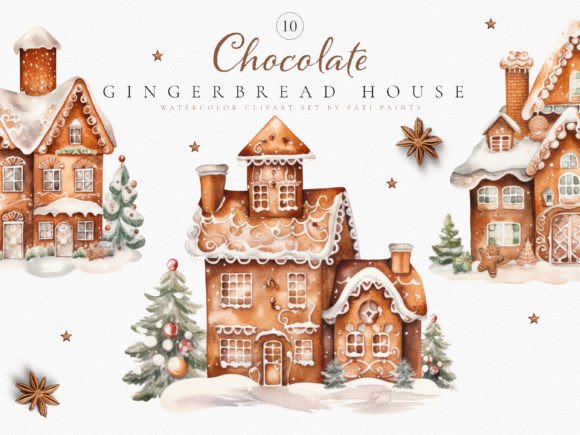
The moment you look at the Watercolor Christmas House Clipart, it feels less like a rigid vector graphic and more like a memory of a cozy winter evening. The watercolor aesthetic introduces soft edges and subtle color bleeding that are notoriously difficult to replicate in thread, but here lies the challenge and the opportunity. Unlike standard blocky clip art, this piece offers a dreamy, nostalgic vibe that screams "home." It creates an immediate emotional connection, suggesting warmth, safety, and tradition.
For a designer eyeing this for a custom apparel project, the visual personality is distinct. It doesn't try to shout; it whispers. This makes it perfect for boutique branding or personalized gifts where subtlety is valued over loud logos. The layout suggests a central focal point, likely the house itself, surrounded by atmospheric elements that could translate beautifully into satin stitch for the main structure and running stitch for delicate details like falling snow or window glows.
Real-World Application: From File to Finished Product
I recently imagined a scenario where this design would shine brightest: a custom embroidered tote bag for a local holiday market. Picture a sturdy canvas tote, perhaps in a deep forest green or a warm cream, featuring the Watercolor Christmas House Clipart centered on the front. The soft, painterly quality of the original illustration would contrast wonderfully with the rough texture of the canvas, creating a tactile experience that draws customers in.
However, the true test of any embroidery file is how it translates to different mediums. For a small business owner looking to expand their inventory, this design could easily transition from a tote bag to a sweatshirt embroidery project. The whimsical nature of the house fits perfectly on the pocket area of a hoodie or the chest of a crewneck tee. When used on baby clothes, the gentle curves avoid the harshness of geometric shapes, making it ideal for nursery decor or a baby's first Christmas onesie.
I also considered its viability as a commercial embroidery asset for kitchen towels or pillow covers. In these applications, the design acts as a centerpiece that anchors the room's holiday theme. The watercolor style allows for a softer integration into home decor compared to traditional, high-contrast Santa or reindeer motifs. It elevates the perceived value of the item, making a simple tea towel feel like a curated, artisanal gift.
Navigating the Technical Challenges
While the aesthetic appeal is undeniable, using the Watercolor Christmas House Clipart requires technical precision. Watercolor relies on gradients and soft transitions, which can get lost in dense stitching. If the stitch density is too high, the fabric will pucker, and the delicate edges will become muddy blobs rather than soft washes of color. Conversely, if the density is too low, the background fabric might show through in unwanted ways, ruining the illusion of the painted house.
Care must be taken when considering the hoop size. If the design is intended for a small hoop, such as those used for caps or hats, the intricate details of the watercolor effect might be compromised. Curved surfaces like baseball caps present a unique challenge; the distortion inherent in embroidering on a curved brim can stretch the soft lines of the house, potentially making the windows look uneven or the roofline saggy. For these items, simplifying the design or focusing on the silhouette might be necessary.
Textured fabrics add another layer of complexity. While a linen apron or a denim jacket provides a great backdrop, the texture can interfere with the smooth flow of the fill stitch needed for the house walls. Thin or stretchy fabrics, common in t-shirts or lightweight scarves, require a robust stabilizer system to prevent the design from shifting or the fabric from tunneling. Dark fabrics present a specific hurdle; without a proper underlay or a light-colored base layer, the pastel tones of the watercolor house may appear dull or muddy against the dark background.
Impact on Brand and Customer Trust
In the world of handmade products, the quality of the embroidery speaks volumes about the maker. A poorly executed Watercolor Christmas House Clipart can make a professional shop look amateurish, while a well-stitched version builds immense trust. Customers browsing Etsy listings or visiting a craft fair want to see craftsmanship. They want to know that the finished product will hold up after washing and wear.
When the design is executed correctly, it enhances the giftability of the item. The emotional resonance of a cozy house makes it a perfect personalized gift for new homeowners, grandparents, or anyone celebrating the holidays. It signals that the seller cares about aesthetics and detail, not just mass production. This attention to visual appeal directly correlates with buyer engagement and the likelihood of repeat business.
Practical Designer Notes for Success
Before committing to a full production run or selling the design commercially, there are several critical steps to take. First and foremost, always test the design on scrap fabric that matches your final material. This allows you to assess the thread colors and ensure they capture the watercolor essence without clashing.
Review the stitch density carefully. If the design feels too heavy, consider adjusting the settings to reduce the fill density, allowing the fabric texture to peek through slightly for a more authentic hand-stitched look. Confirm the stabilizer type; cut-away stabilizers are usually best for maintaining the shape of detailed designs like this one, especially on stretchy materials.
Inspect the small details closely. Are the tiny windows clear? Do the edges of the roof hold their shape? Sometimes, a design looks perfect on screen but loses definition when stitched. Testing in black and white mockups can help you visualize the contrast levels before adding color threads. Compare how the design performs on both light and dark backgrounds to determine if it needs a backing or if the thread palette should be adjusted.
Finally, verify the licensing terms. Ensure that you have the right to use the Watercolor Christmas House Clipart for commercial projects, whether you are selling finished goods or offering the digital file as part of a bundle. Understanding the distinction between personal and commercial usage protects your craft business from legal issues down the line.
Ultimately, the Watercolor Christmas House Clipart is a versatile and evocative asset for any designer willing to put in the work to master its nuances. It bridges the gap between digital art and textile craft, offering a fresh alternative to traditional holiday motifs. With careful planning and execution, it can transform a simple piece of fabric into a cherished keepsake that captures the spirit of the season.